Voice interfaces
Live speech-to-text with push-to-talk and continuous modes, and spoken responses.
AI in production, not in a demo
I build products where AI does real work for real users — voice, language models and structured scoring — engineered with the fallbacks, limits and review a production system needs.
What I build
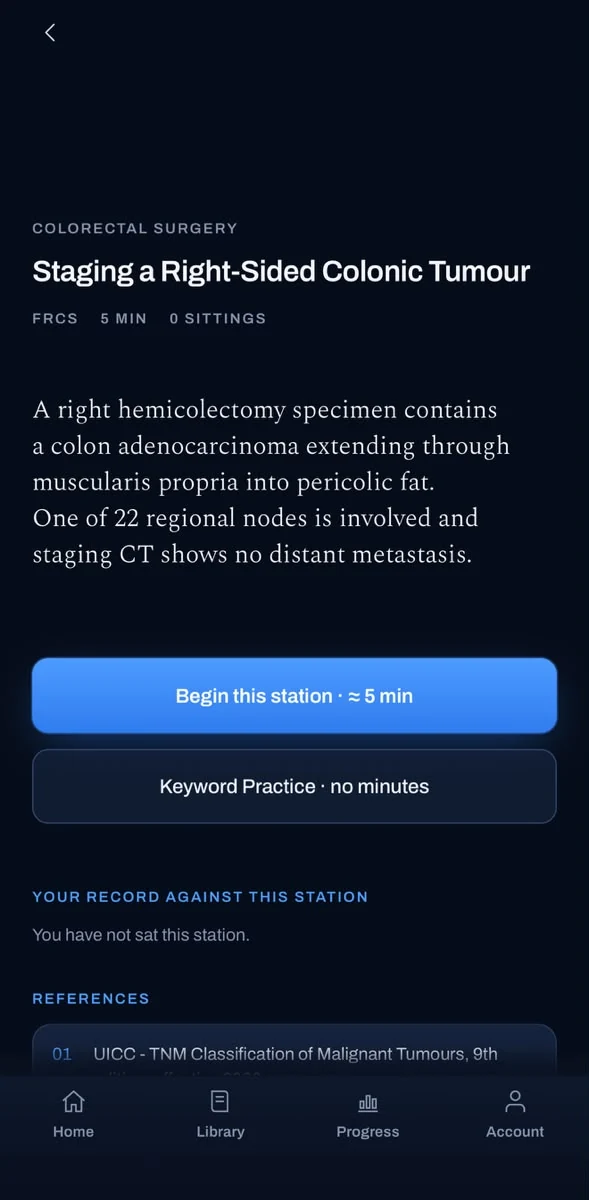
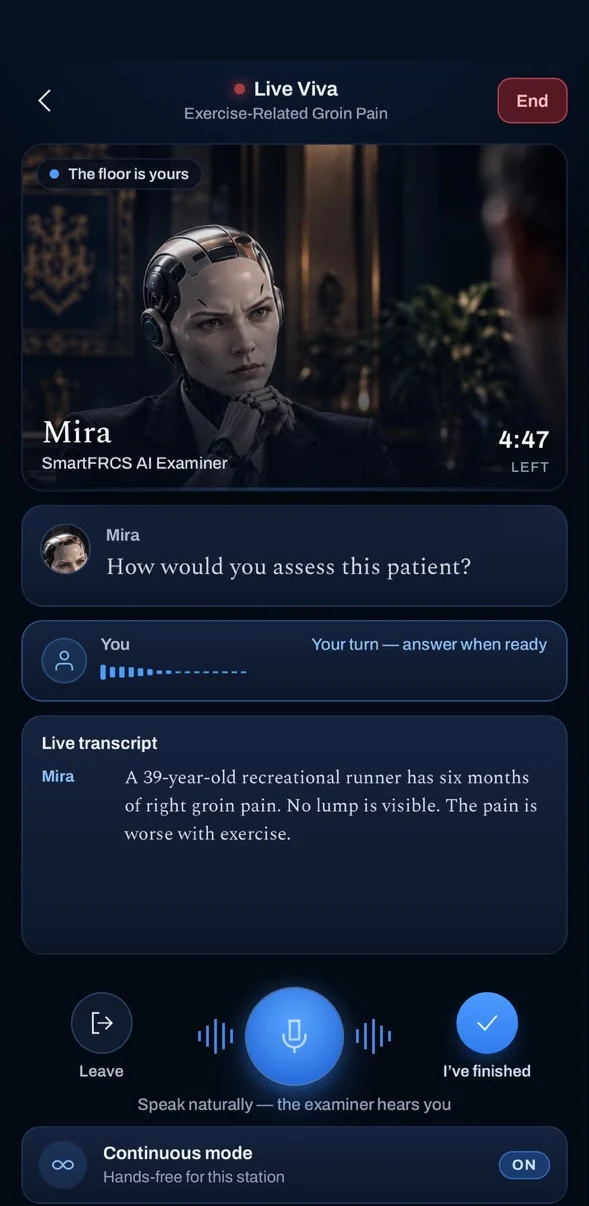
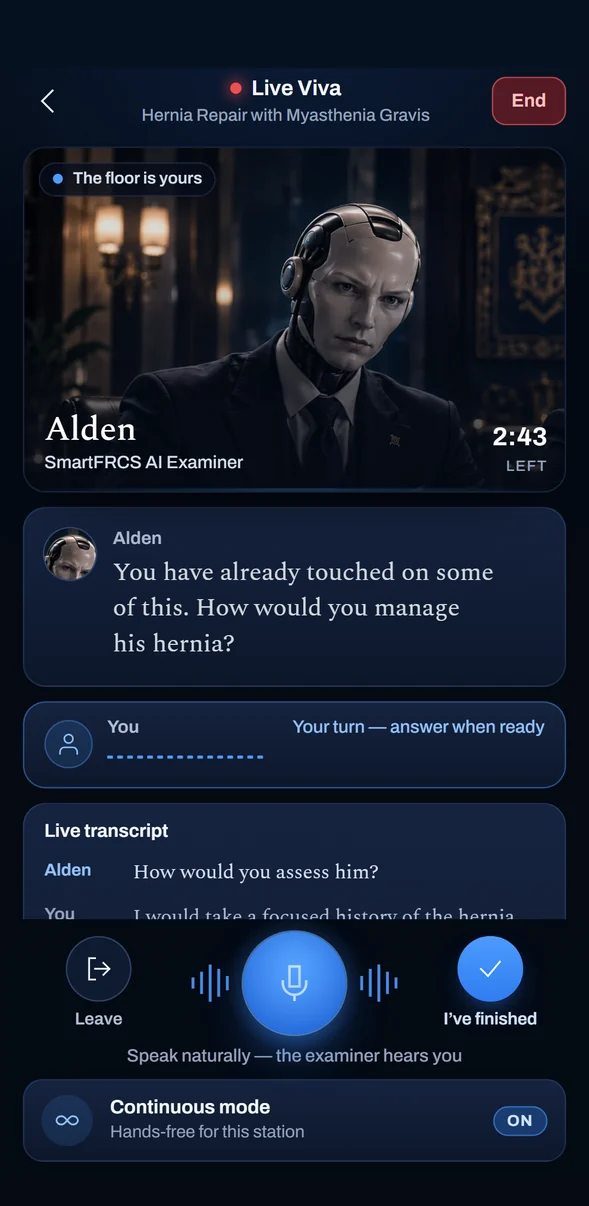
Smart FRCS AI is the reference: an AI examiner that listens to a spoken answer, asks a follow-up based on it and scores it against a published scale.
Live speech-to-text with push-to-talk and continuous modes, and spoken responses.
Questioning, assessment and generation, with provider failover so one outage does not stop the product.
Scores against defined scales, reports and transcripts users can review — not opaque answers.
Published work
Every link goes to the real product or its store listing.
An AI examiner for the FRCS oral viva — spoken, examiner-led and scored on the real band scale
What's included
The model is the smallest part. A typical AI scope also covers:
How it works
No fixed promises before the facts are known. Timelines and cost come from the agreed scope, and you see progress at every milestone.
We talk through the idea, the users and the constraints. You get an honest view of whether — and how — to build it.
A written scope with milestones and an estimate based on it, so you know exactly what is being built.
Flows and screens you can click through and approve before any development starts.
Development in agreed stages, with working builds you can review as the work progresses.
Final testing, deployment and — for apps — store listings and submission.
Updates, fixes and the next version, under the support arrangement we agreed.
Founder-led
You won't be passed to an account manager. You talk to the engineer who designs your product and answers for it.
Khalid AboubakrFounder & principal engineer
Questions
Smart FRCS AI uses Anthropic models with automatic OpenAI failover, and ElevenLabs for speech. The right providers for your product depend on the task, the data and the budget.
Often, yes. I start by finding the one task where AI saves real effort, then build it with the limits and review it needs.
Most products are best built on existing models, with your own content supplied at the moment of each request and the output checked against your rules. Fine-tuning or training is worth considering only when testing on real examples shows that approach falls short.
That is decided in the scope: what is sent, what is removed or anonymised first, which provider terms and retention settings apply, and what must never leave your systems. If your data is regulated, tell me the requirements at the start.
Current models handle Arabic, but quality varies with the task and the dialect, especially in speech. I test with real Arabic input from your users before committing to an approach, rather than assuming English results carry over.
It depends on what the product has to do: features, user types, integrations and the systems behind it. After a discovery call you get a written scope and an estimate based on it — not a number guessed in advance.
With me, directly. I lead the project from the first call; when specialists are needed, I bring them in and stay responsible for their work.
Start your project
Your message comes straight to me. I'll reply personally with questions that sharpen the plan, an honest read on scope, or a clear no if I'm not the right fit.
Khalid AboubakrFounder & principal engineer